 English
  Українська
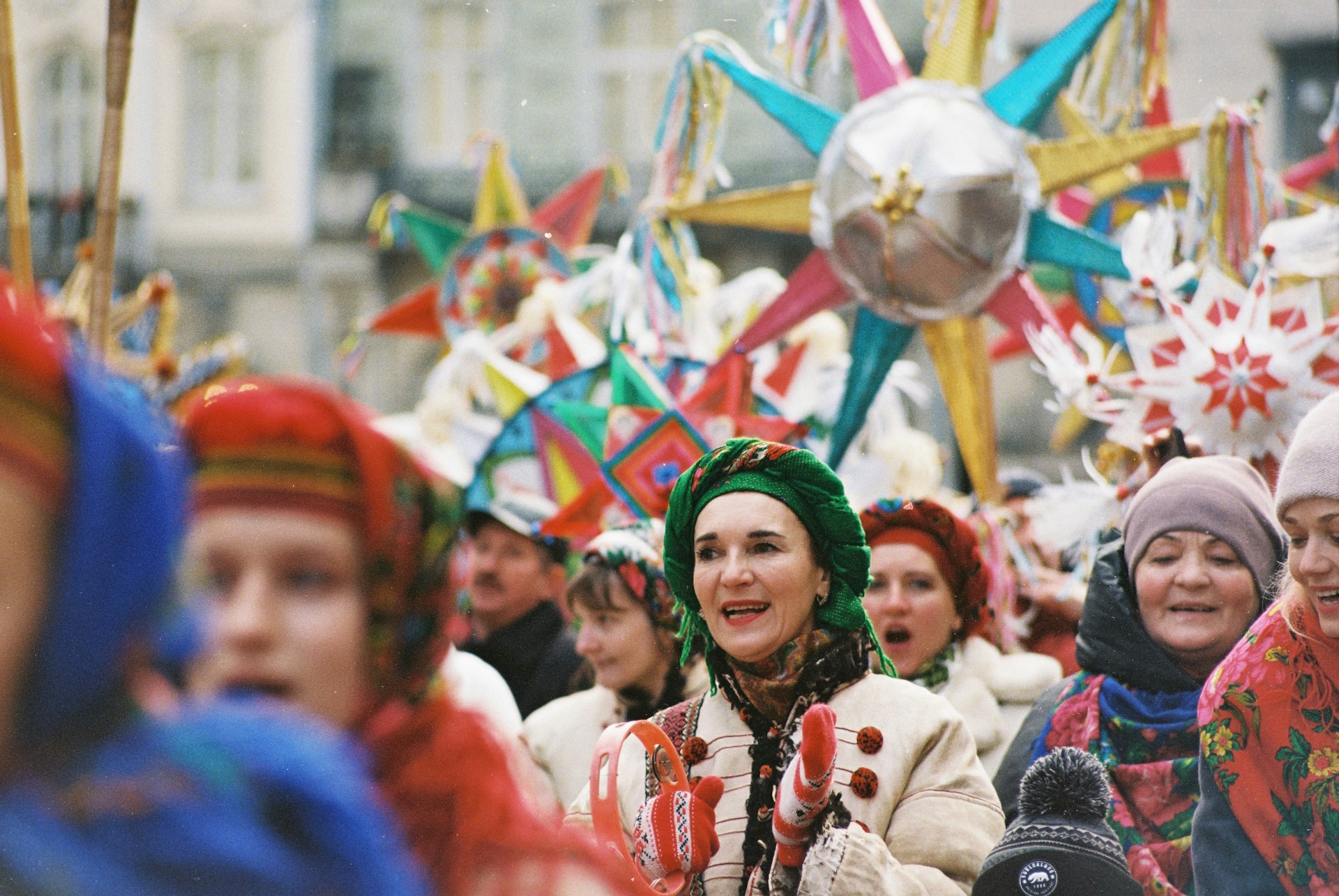
Christmas holds a sacred place in Ukrainian culture, marking a season of joy and community spirit. In many parts of the world, the holiday focuses on shopping and exchanging gifts. In Ukraine, it’s a time for genuine celebrations. Extensive preparations begin well in advance, filling homes with the scents of traditional dishes and the sounds of old-timey carols. The crisp air, frost-laden mornings, and the quiet streets covered by gentle snow definitely complement the holiday’s spirit, making it a reflective, almost magical time. Families, neighbors, and communities come together, restoring customs that reach back to simpler, more genuine times when small joys were cherished.
Although some may picture Ukraine’s winter as harsh and dreary, a visit there reveals a welcoming and inviting atmosphere. The chilly weather contrasts beautifully with the warmth exuded by traditions that illuminate the winter months with celebrations. Despite some religious differences between the Catholics, Orthodox, Protestants, Jews, and Muslims, this season highlights a shared sense of unity where people unite in celebration. Ukrainian Christmas combines practices with expressions of faith, creating a sense of communal joy and spiritual comfort for all who join in. The celebrations reflect the legacy of the country and its dedication, to unity and joy throughout the holiday season.
Preparation for the Holiday
A 40-day fast, beginning on November 15th and ending on December 25th, is a customary practice in Ukraine before Christmas. Saint Apostle Philip’s Memorial Day falls on the final day of the fast, thus the name “Pylypivka.” A fast is a period dedicated to spiritual and physical renewal, marked by abstaining from certain indulgences and focusing on self-reflection and repentance.
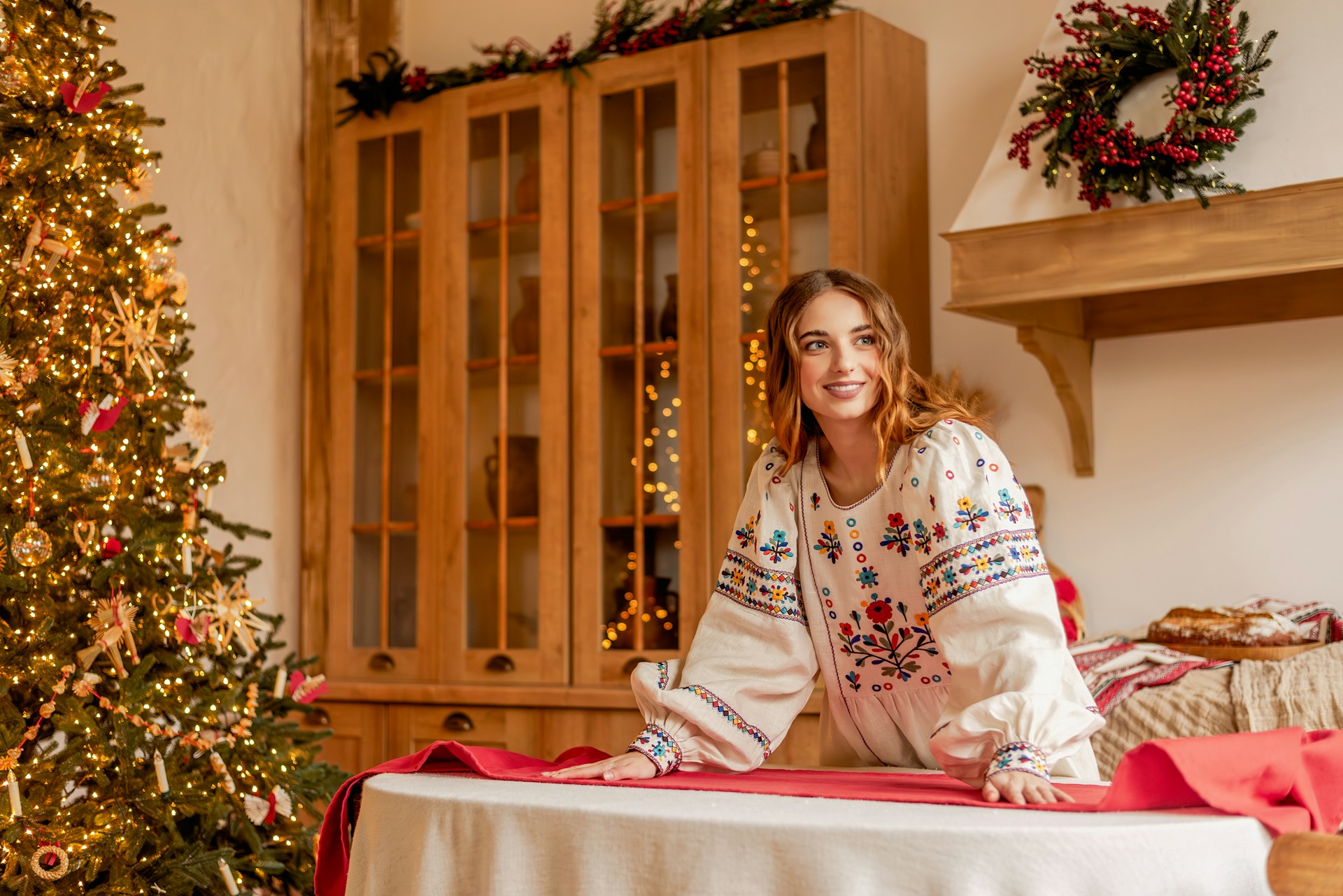
On the eve of Christmas, according to Ukrainian folklore, it was traditional to clean the home, resupply household equipment, and gather all the resources needed for the winter, such as firewood, cloth, wheat, honey, and more. New or clean “rushnyky” (traditional coverings) and herbs were introduced to the Christian ritual of decorating icons before Christmas.
The Holy Supper, or “Sviata Vecheria”
Christmas in Ukraine has seen a shift in celebration dates, with many now observing it on December 25th as of 2023, recognizing it as an official state holiday. Previously, the majority celebrated on January 7th, following the Julian calendar. However, starting September 1, 2023, the Orthodox Church of Ukraine and the Ukrainian Greek Catholic Church adopted the Revised Julian calendar, aligning more church holidays, including Christmas, with the Gregorian calendar dates. This change reflects a significant cultural adaptation, affecting how traditional festivities and religious observances are scheduled. In the days leading up to Christmas, Ukrainian homes are bustling with activity. Families come together to prepare for the holiday season. One of my favorite activity before Christmas Eve was churning poppy seeds in a “makitra,” a cone-shaped ceramic pot, using a wooden “makogin” to be used in “kutya,” the centerpiece of our holiday table.
The first star in the evening sky marks the beginning of the celebration, and families gather around the table, eager to partake in the “Sviata Vecheria,” the Holy Supper. The Table must have 12 lean (meat and fat free) dishes, symbolizing the 12 apostles.
Glossary – slovnyk – словник
- Winter – zyma – зима
- Snow – sneeg – сніг
- Frost – moroz – мороз
- Christmas – Rizdvo – Різдво
- A holiday – svyato – свято
- Faith – veera – віра
- Spirit – dooh – Дух
- Christ is born! – Chrystos narodyvsya! – Христос народився!
- Let us praise Him! – Slaveemo yogo!- Славімо Його!
- A prayer – molytva – молитва
- Christmas Eve – Svyatyi Vechir/Svyatvechir – Святий вечір/Святвечір
- A Christmas tree – yalynka – ялинка
Each dish carries its own unique significance, unique to the rich Ukrainian heritage. The lineup typically includes:
- Kutia: The star of the meal, this sweet wheat porridge mixed with honey and poppy seeds symbolizes unity and prosperity.
- Uzvar: A traditional dried fruit compote that quenches thirst and adds a sweet note.
- Borshch: A Unesco-recognized beet soup, often made without meat, served with wild mushrooms, reflecting the simplicity and purity of the season.
- Varenyky: Dumplings filled with potatoes, cabbage or mushrooms, signifying abundance and comfort.
- Pampushky: Soft rolls that complement every dish on the table. The dinner variety would be rubbed with garlic, and the dessert variety would be filled with poppy seeds or jam.
- Golubtsi (Stuffed cabbage rolls) and pickled herring: Offering a burst of flavor and texture.
- Bean dishes, mushroom gravy, and fried fish: Each dish is prepared with care to adhere to the fasting traditions, yet rich in flavor.
- Peas and buckwheat dishes: Simple, humble ingredients that hold a place of honor.
This extensive menu equally satisfies the palate and pays homage to the spiritual journey of Christmas, blending pre-Christian traditions with Christian beliefs. Each family may tailor the menu to their regional and familial traditions, ensuring that while the dishes may vary, the spirit of the holiday remains focused on unity, reflection, and celebration.
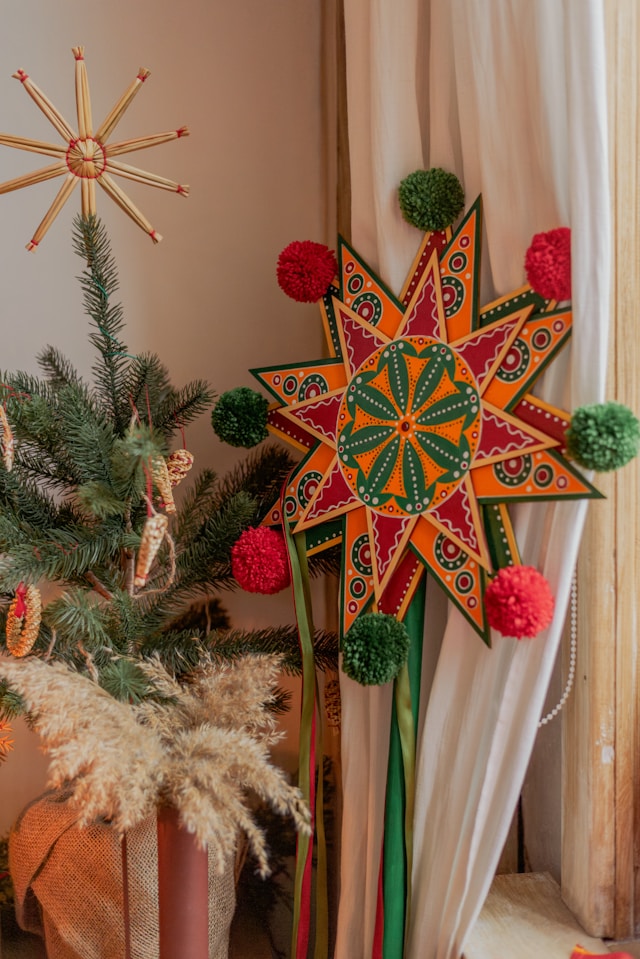
In Ukrainian Christmas traditions, an absent family member, whether away or passed, is symbolically included at the Sviata Vecheria. A place setting complete with plate and silverware is reserved at the table in their honor, ensuring their spirit is part of the celebrations. This gesture underscores the deep family bonds and respect for ancestors that characterize Ukrainian holiday observances.
The “Didukh”, a sheaf of wheat or barley, would be placed either on the table or the corner of the room. Adorned with ribbons and ornaments, the Didukh represents the spirit of ancestors who watch over and protect the family. It is a reminder of the deep connection to the land and the wisdom passed down through generations.
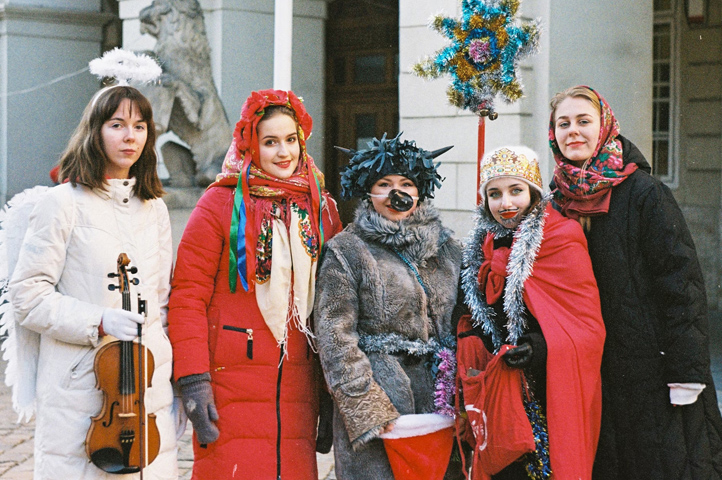
As the Holy Supper concludes, the joyful ringing of doorbells begins. Carolers, young and old, dressed in traditional attire or as characters from the nativity, visit homes. They bring festive greetings and well-wishes for health and happiness in the coming year, often delivered through poetic verses. After their performances, which include a few carols, the hosts traditionally offer sweets or a small token of money in appreciation. The celebrations may even include a lively reenactment of the nativity scene, known as “Vertep,” adding depth to the evening’s festivities.
The morning of December 25th starts with people greeting each other with the phrase “Christ is Born!” and the response “Let us Praise Him!” On this day, people go to church for Christmas prayer and come together within the family circle to visit relatives. Unlike Christmas Eve, Christmas guests are no longer restricted to fasting. The festive table adorned with candles and decorated Christmas branches. The scent of freshly baked bread, symbolic of prosperity, fills the air as the “kalach” takes its place at the center of the table. This braided bread, adorned with intricate designs of wheat and symbols of the sun, represents the cycle of life and the hope for a bountiful year ahead.
Koliada Caroling
The singing of traditional carols begins. “Koliadky” (comes from the word ‘calendar’, which starts with the birth of Christ) are sung for Christmas and “Shchedrivky”, (comes from the Ukrainian word for generosity) – for so-called Generous Evening on December 31st (in some parts of Ukraine, shchedrivky are sung only on the Feast of Epiphany, the last holiday of the season). These songs, with their catchy melodies and rich harmonies, tell stories of Christ’s birth, of winter’s beauty, and of the enduring spirit of the Ukrainian people.
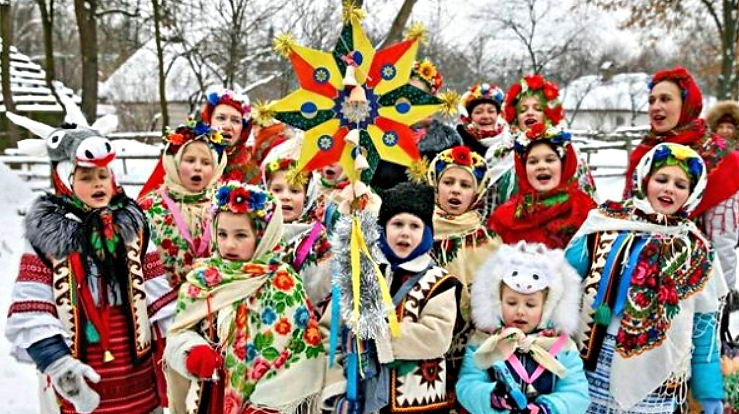
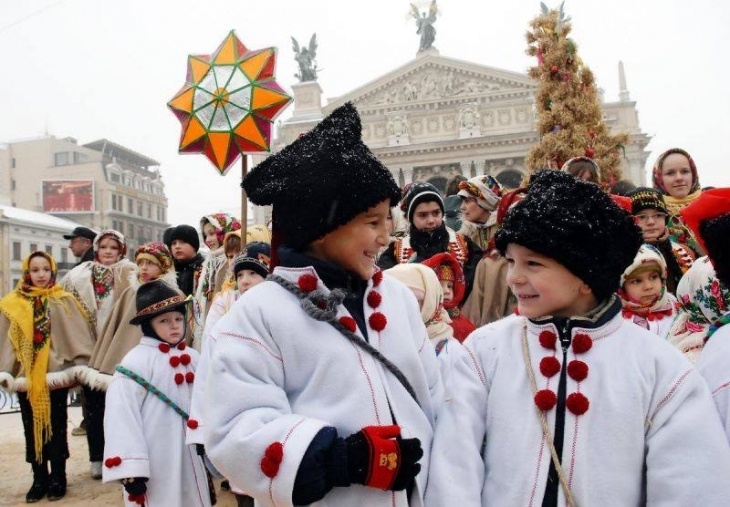
Initially, the boys were the organizers of Christmas caroling groups in Ukraine. Prior to the event, they would choose a leader or “vataga,” and assign other roles such as “goat,” “shepherd with a scarecrow,” “mikhonosha” (deacon), and more. In certain parts of Ukraine, the “goat” would wear an inside-out sheepskin coat and be adorned with straw horns, a tail, and a bell around its neck.
Carolers start their performance with celebratory songs and comedic moments after asking permission to carol when they approach a courtyard. In poetic works, the host, hostess, and children are praised and bestowed with well-wishes for health, happiness, and domestic wealth.
Did you know that the world’s most famous Christmas melody – “Carol of the Bells” is, in fact, originally a Ukrainian carol called Shchedryk, composed by Mykola Leontovych at the beginning of the XX century, based on ancient Ukrainian folk songs? Just listen!
Christmas Tree
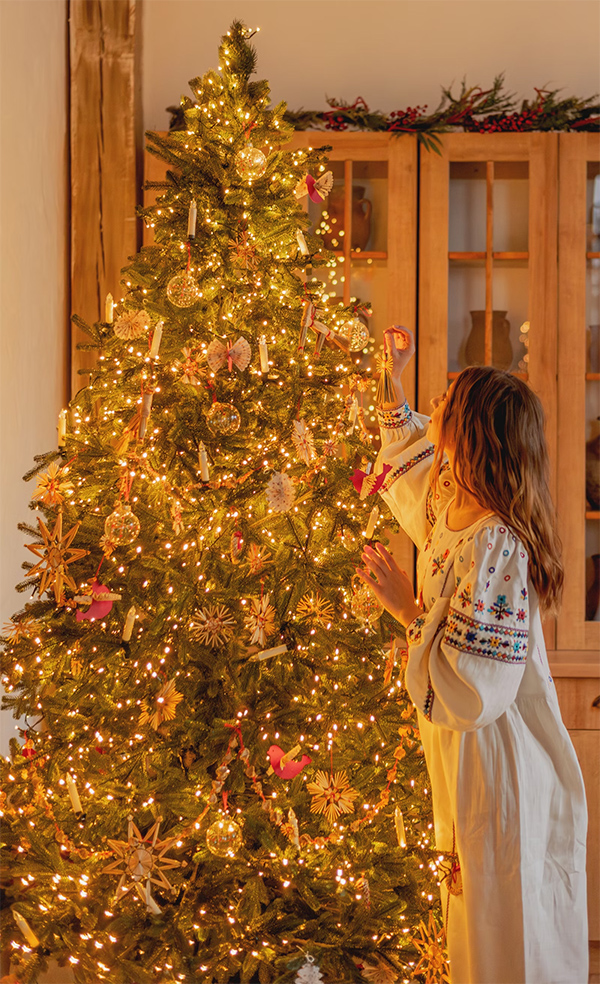
Christmas trees in Ukraine have become a common sight during the festive season, adorning city centers, shop windows, and homes with colorful lights. While decorating trees has become a modern norm, it wasn’t widespread in Ukraine before World War II, often regarded as a tradition brought by the Soviet Union. Historically, the tradition of adorning trees, believed to possess magical powers, dates back to ancient beliefs across many cultures, where trees were decorated to appease supernatural forces with offerings like fruits, nuts, and eggs.
The fir tree, seen as a symbol of eternal life because it remains green all year, was thought to have special favor with the sun. In Ukraine, the ritual of decorating a tree became more prevalent during the Soviet era, replacing some older Ukrainian traditions like the ceremonial “didukh,” a sheaf of wheat that symbolizes the household’s ancestors during the Christmas season. This shift from traditional Ukrainian symbols to the more Western-style Christmas tree marked a significant cultural adaptation influenced by external customs.
Tradition meets transition: St. Nickolas and Did Moroz in Ukrainian Christmas lore
In Ukrainian Christmas traditions, Did Moroz and St. Nicholas are two distinct figures. The image of Did Moroz as a kind New Year character emerged only in the late 1930s. He was adopted as a replacement for St. Nicholas, who was banned after the Bolsheviks came to power. Neither Christmas nor New Year were legal under the Soviet regime until 1936. It was only in the new year of 1937 that the Bolsheviks allowed the celebration of New Year. But, of course, without any religious characters. Instead of Christmas nativity scenes, angels, baby Jesus, the Three Wise Men, and St. Nicholas, various bunnies, bears, and the same Did Moroz appeared. The following year, Snihurónka was added to him.
In fact, Did Moroz is a mythological character of the ancient Slavic tribes. In ancient times, he was considered the ruler of winter and frost, and was called by different names: Triskun, Studenets, Karachun, Zymnik, Moroz, Grandfather Frost. He was believed to ruin crops, freeze people along with their cattle and all their supplies. Sacrifices were made to appease Triskun-Moroz.
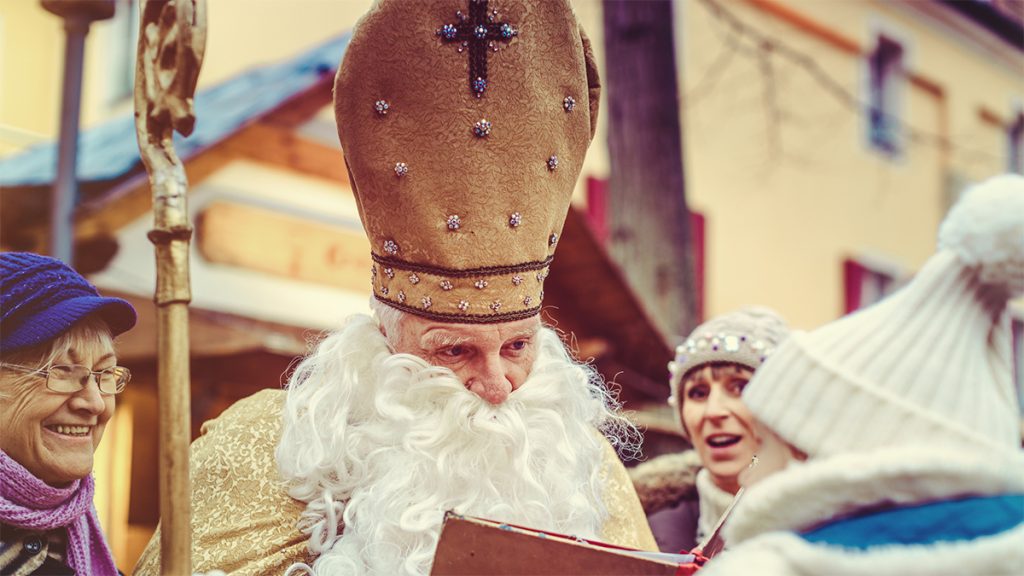
On the other hand, St. Nicholas, known as Svyaty Mykolai in Ukrainian, is a Christian saint who is venerated for his generosity and kindness. St. Nicholas history in Ukraine goes back to the 10th and 11th centuries, when Kyivan Rus Prince Volodymyr brought Christianity and St. Nicholas to Kyiv. In churches, his icons are prominently placed on the iconostas, usually next to Jesus, the Mother of God, or the patron saint of the church. His icons were found also in nearly every home In Ukrainian tradition, St. Nicholas Day is celebrated on December 19th, and children receive small gifts and treats in commemoration of his deeds. St. Nicholas is often depicted as a bishop with a white beard, wearing a red robe and carrying a staff or bishop’s crook.
Experience the magic of Ukrainian Christmas for yourself. Visit Ukraine during this festive season to immerse yourself in a celebration filled with deep traditions and joyful gatherings. Witness the vibrant customs and partake in the ancient rituals that illuminate the winter season. Whether you’re joining a family feast, observing the colorful decorations, or listening to heartfelt carols, the spirit of Ukrainian Christmas offers a unique and enriching experience that invites warmth and joy into the heart of winter.