 English
  Українська
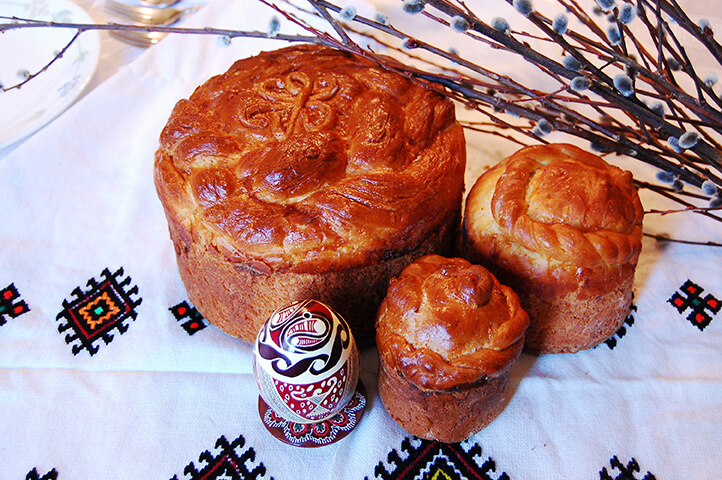
Spring has always been an important season for Ukrainians. It’s not only a new beginning and awakening of nature but also a time to plant a new harvest. Springtime is associated with agricultural work and various rituals intended to ensure a good harvest in fall.
The main spring holiday in Ukraine is Easter, which organically combines pagan and Christian rituals.
Willow Sunday marks the beginning of Holy Week and Easter preparations in Ukraine. Known in other countries as Palm Sunday, it’s a day when people throughout the country carry willow branches to be blessed at church services. After the service, there’s a tradition of tapping each other with the branches to encourage good health, accompanied by regional phrases.
Holy Thursday, or Maundy Thursday, is a day of big cleaning. Ukrainians prepare their entire houses for the upcoming Easter, which is why it’s called Чистий четвер (Clean Thursday).
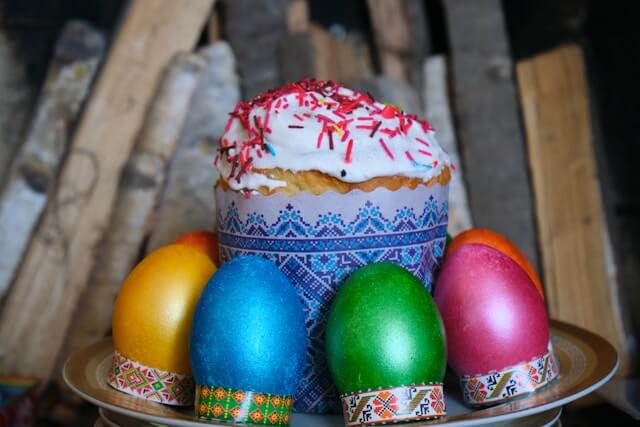
The baking of the Easter bread, known as Paska, is a highly symbolic event with many rituals. The process is accompanied by songs, as Ukrainians believe Paska should only be prepared in a good mood. Paska is a tall, round sweet bread with raisins and decorations on top, reminiscent of Italian panettone.
Good Friday is a special day, the last day of the long fasting period when meat consumption is not allowed.
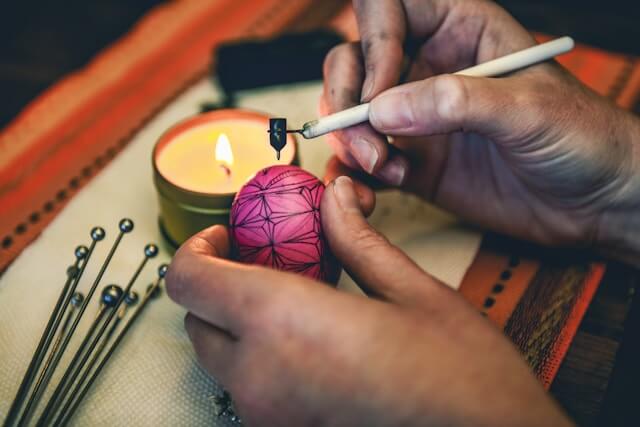
Pysanky Easter egg decoration, or pysankatstvo, is a widespread and unique Ukrainian cultural tradition. The decorating technique involves wax, candles, and paints. There are other popular egg decoration types like krashanky, lystovky, driapanky, maliovanky, and nakleianky.
The pysanka (Ukrainian: писанка, писанки (plural)) is one of Ukraine’s national symbols, known throughout the world. Pysanky imagery is prevalent in Ukrainian literature, with Taras Shevchenko comparing a lovely Ukrainian village to a pysanka. Ukrainian Canadians in Canada even built a giant statue of one in Vegreville, Alberta. Since the pysanka is closely linked to religion in Ukraine, it was almost considered a lost tradition during Soviet times, especially in central and eastern regions. The Ukrainian diaspora in Canada and the USA helped preserve the tradition during this time. Each color and pattern on a pysanka has its own meaning and symbolizes different things: fish represents Christianity, chicken symbolizes fertility, and a triangle symbolizes the holy trinity.
Another beautiful spring tradition is Ukrainian spring songs called vesnyanky and haivky. Both adults and children sang them to encourage the arrival of warm weather and chase away winter. People believed that the louder they sang, the sooner spring would come.
The main feature of performing vesnyanky is to be loud and resonate throughout the village. They were sung not for people, but for nature itself, to awaken it from winter. Therefore, it was important for the sound to be high-pitched, almost piercing. Typical themes of vesnyanky include winter, spring, girls, boys, old people, crowns, flowers, wreaths, and the overall message celebrates the end of winter, the arrival of spring, the beginning of a new year, and the continuation of life.